
Late June in Austin means one thing: the heat is here, and it isn’t going anywhere until October. Temperatures pushing triple digits, humidity that makes the air feel thicker than it should, and AC systems working around the clock to keep up. For most Austin homeowners, this is the time of year when the relationship with your air conditioner gets complicated.
This guide covers what your system is actually dealing with right now, what you can do to help it, and how to tell the difference between a system that just needs some attention versus one that’s quietly building toward a breakdown.
Why Austin Summers Are Uniquely Hard on AC Systems
Most national advice about air conditioning is written for moderate climates. Austin isn’t that. When your system runs 10 to 12 hours a day for four straight months, the wear accumulates faster than in places where AC season lasts six weeks. Equipment that passes a spring inspection with flying colors can show real stress by August if it wasn’t in good shape to begin with.
There’s also the humidity factor. The goal of an air conditioner isn’t just temperature. It’s comfort, and comfort in Central Texas means pulling moisture out of the air as well as cooling it. A system that’s struggling to keep up will often fail at humidity control before it fails at temperature control. If your home feels “clammy” even when the thermostat reads 74°F, that’s worth paying attention to.
And then there’s the demand spike problem. On a 105°F afternoon, your system is trying to maintain a 30-degree differential between inside and outside. That puts real strain on refrigerant pressure, electrical components, and the compressor. Systems that have deferred maintenance issues tend to surface exactly at this moment, when you least want them to.
What Your AC System Needs from You Right Now
1. Keep the air filter honest
A clogged filter restricts airflow, which forces your system to work harder to move the same amount of cooled air through your home. During peak summer, check your filter every 3–4 weeks. If it looks gray and dense, replace it, even if it’s “only been a month.” Homes with pets, heavy occupancy, or dust-prone environments go through filters faster than the manufacturer’s recommendation assumes.
2. Give your outdoor unit room to breathe
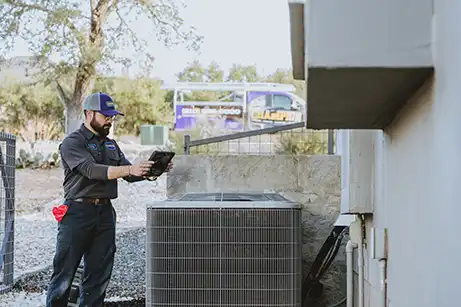
The outdoor condenser unit releases heat pulled from inside your home. If it’s surrounded by shrubs, grass clippings, or debris, it can’t dissipate that heat efficiently. Clear at least two feet of space around the unit. Don’t cover it with anything, and don’t try to hide it with dense landscaping. A unit running hot will shorten compressor life.
3. Use your thermostat strategically
Setting your thermostat at 68°F on a 105°F day doesn’t cool your home faster. It just runs your system longer and harder without reaching the setpoint any sooner. Most efficiency guidance recommends setting your thermostat to the highest temperature you can comfortably tolerate, typically 76–78°F when home. Every degree lower increases energy consumption meaningfully. If you have a programmable or smart thermostat, set it to allow the home to rise a few degrees while you’re away and pre-cool before you return. That pattern tends to be easier on equipment than constant temperature swings.
4. Don’t ignore your vents
Blocked or closed supply vents create pressure imbalances in your duct system. The common misconception is that closing vents in unused rooms saves energy. In a forced-air system, it usually does the opposite. The system was designed around a specific airflow balance, and disrupting it puts extra stress on the blower and can lead to early equipment failure.
5. Watch the condensate drain
Austin’s summer humidity means your AC is pulling a significant amount of moisture out of the air and routing it through a condensate drain line. Those lines clog. Algae, sediment, and debris are common culprits. When a drain clogs, your system may shut itself off as a safety measure, or worse, overflow and cause water damage. A small amount of distilled white vinegar poured into the drain access port monthly can help prevent buildup. If you’re already seeing water pooling near your indoor unit, that’s a call to make sooner rather than later.
Signs Your System Is Struggling & Not Just Working Hard
There’s a difference between an AC that’s running a lot because it’s 102°F outside and one that’s running a lot because something is wrong. Here’s how to tell them apart:
- The house isn’t reaching setpoint in the late afternoon. Some lag on extreme heat days is normal. But if your home consistently can’t get below 80°F when you’re set for 74°F, even after the sun starts to drop, that’s a sign the system is undersized, has a refrigerant issue, or has efficiency-robbing problems like dirty evaporator coils or duct leaks.
- Short cycling. If your system turns on for a few minutes, shuts off, then immediately turns back on, that’s called short cycling. It can indicate a refrigerant problem, an oversized system, or a failing component. Short cycling is hard on compressors and will accelerate wear significantly.
- Ice on the lines or unit. Counterintuitive, but ice on your AC is never a good sign in summer. It usually means restricted airflow (dirty filter, blocked vents) or low refrigerant. Don’t just let it thaw and ignore it. The underlying cause needs to be addressed or the problem will come back.
- Unusual sounds. Banging, grinding, or clicking that wasn’t there before all indicate something mechanical. None of these improve on their own. If you heard something odd and hoped it would stop, now’s the time to schedule a diagnostic.
- Your energy bills jumped significantly. A spike in your electric bill without a significant change in behavior often means your system is working harder to achieve the same result, which typically points to a loss in efficiency. Dirty coils, low refrigerant, and duct leaks are common causes.
What a Professional Tune-Up Does That You Can’t Do Yourself
There’s a ceiling on what homeowner maintenance can accomplish. Changing filters and clearing debris around the outdoor unit are good habits. But the things that actually prevent summer breakdowns require equipment and training.
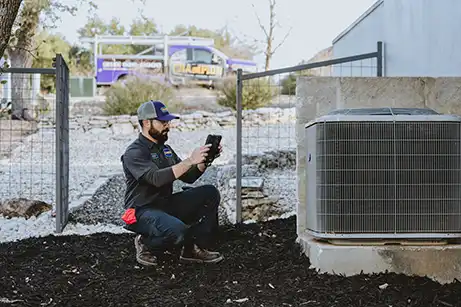
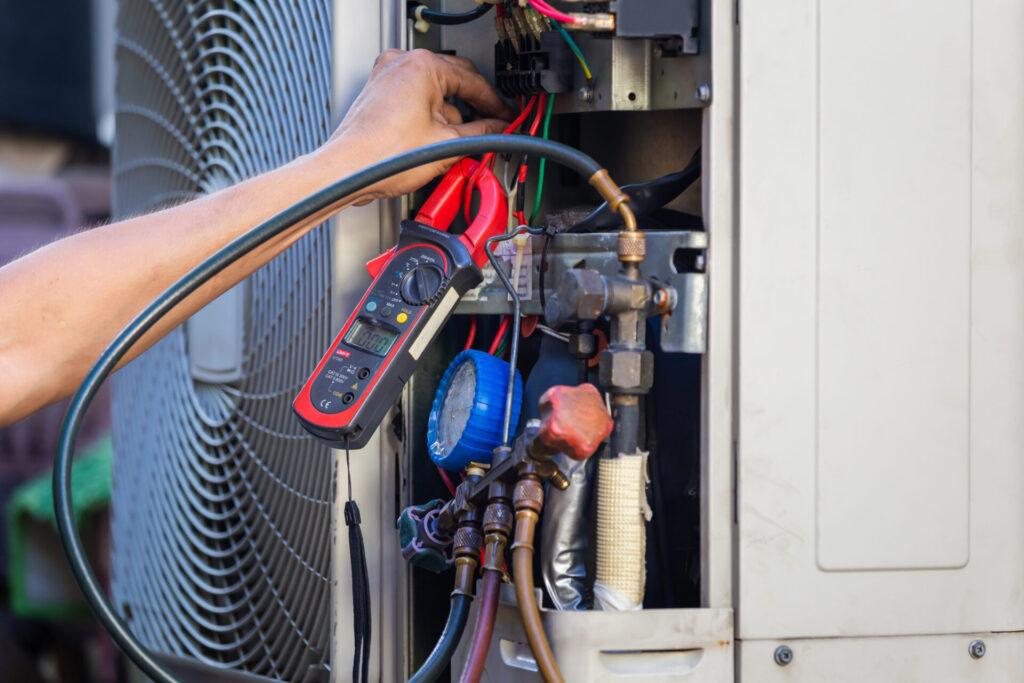
A proper AC tune-up from a licensed technician includes checking refrigerant pressure and inspecting for leaks, cleaning evaporator and condenser coils, testing electrical connections and startup components, inspecting the condensate drain and safety switch, and evaluating duct conditions for leaks or blockages. These are the areas where problems develop slowly and invisibly. A capacitor that’s degrading, a coil that’s 40% coated in dust, a refrigerant charge that’s drifted 10% low: none of these will announce themselves until they fail, and they tend to fail on a Saturday in August.
If your system hasn’t had a professional inspection this year, late June is still a workable window, but it’s narrowing. July and August are when appointment slots get tight and when the consequences of waiting get real.
Champion has been doing this in Austin since 2007. HVAC License TACLA00053541E. The $69 AC Tune-Up is a whole-system inspection, not a filter change and a handshake. If something needs attention, you’ll hear about it before it becomes an emergency.
When to Consider Repair vs. Replacement
If your system is 10 years old or newer and the only issue is deferred maintenance, a tune-up and targeted repair usually make sense. If it’s 15+ years old, running on R-22 refrigerant (production ended in 2020, so supplies are limited and expensive), and has needed multiple repairs in the last two years, the math starts shifting toward replacement.
The honest version of that conversation depends on what the technician actually finds. Champion’s approach is to tell you what’s there, give you real options with written pricing, and let you decide. If a repair doesn’t make financial sense given the system’s age and condition, that’s what you’ll hear. If a new system is worth considering, the technician will explain what’s available and what the cost-benefit looks like with current financing options, including payments under $100 a month on new systems with approved credit.
One More Thing: Duct Cleaning and Indoor Air Quality
Summer is also the time of year when duct cleaning gets noticed. Systems that have been running hard for weeks start circulating whatever’s been sitting in the ductwork, including dust, allergens, and in humid climates, sometimes mold spores. If anyone in your home has seasonal allergies, asthma, or you’ve just moved in and have no idea when the ducts were last cleaned, it’s worth a conversation. Champion offers a $150 OFF duct cleaning coupon currently.
For whole-home air quality upgrades, the Dust Free® Whole-Home Air Purifier and indoor air quality solutions are worth looking at if you’ve been dealing with persistent dust, odors, or respiratory irritation that standard filtration hasn’t resolved.
Don’t Wait for a Breakdown to Make the Call
The homeowners who get through Austin summers without drama are mostly the ones who scheduled their tune-up in the spring, have a system in reasonable condition, and have someone to call when something looks off. The ones who call us in August are often dealing with a problem that was visible in June if anyone had been looking.
If your system hasn’t been serviced this year, now’s the time. Champion Cooling, Heating & Plumbing serves Austin and surrounding communities including Round Rock, Pflugerville, Cedar Park, Leander, Lakeway, Buda, Kyle, and more. Live answering 24/7. Book online or call (512) 575-4377.
Ready to get your AC inspected before summer gets worse?
Champion’s $69 AC Tune-Up includes a full system inspection, covering coils, refrigerant, electrical, and condensate drainage. Serving Austin and surrounding areas since 2007.